


Report on Microplastic Pollution from Oil-Based Paints and Other Types
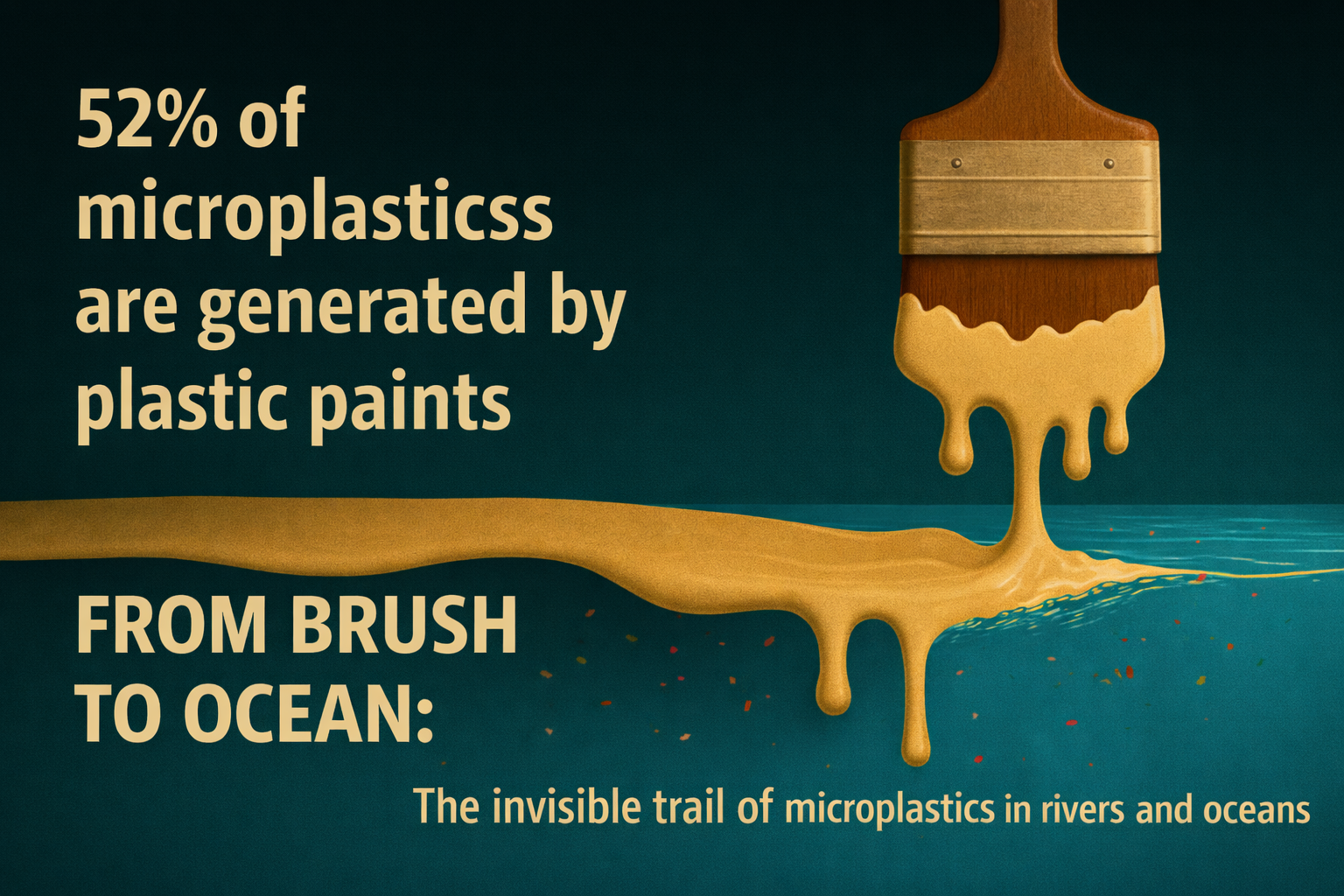
Microplastic pollution from the degradation of paints and coatings, including modern oil-based (alkyd/synthetic polymer) and water-based formulations, is increasingly recognized by verified sources as a significant and often underestimated environmental problem.
Paints, which can be composed of up to 37% plastic polymers by weight, release microplastics primarily through wear, deterioration, and maintenance activities.
The problem is exacerbated by the high toxicity of paint fragments due to the leaching of heavy metals and biocides (e.g., copper, lead) used as additives.
While research continues to emerge, policies and innovative industry solutions are beginning to focus on the paint lifecycle to mitigate its significant global contribution to microplastic release.
1. The Source: How Oil-Based Paints and Other Types Create Microplastics
The problem stems from the chemical composition and life cycle of most modern paints and coatings, which rely on synthetic polymers as binders.
| Category | Source Mechanism |
|---|---|
| Composition | Modern “oil-based” (alkyd) paints, as well as water-based (acrylic) ones, contain synthetic resins and polymers (the “plastic” component). These polymers are what form the durable film, which turns the dried paint into a plastic material. |
| Wear and Degradation (Secondary MPs) |
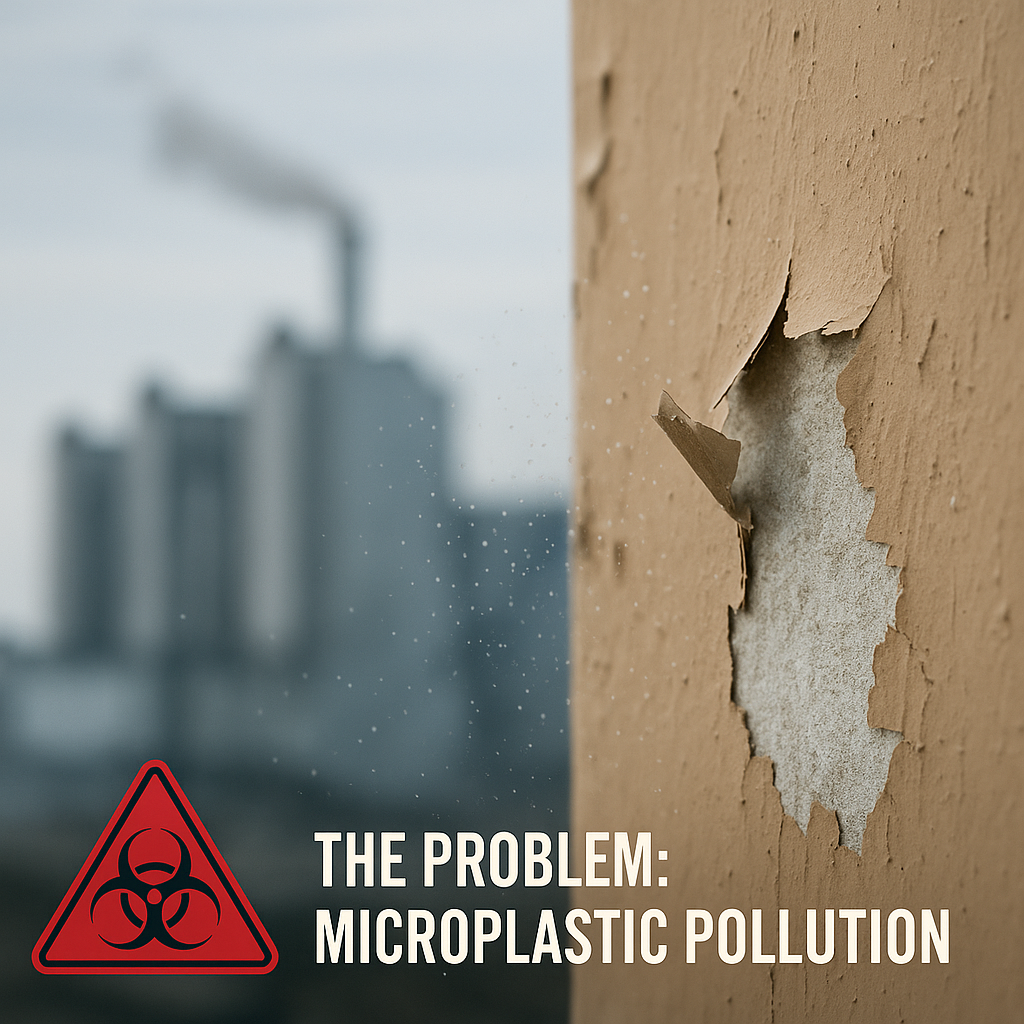
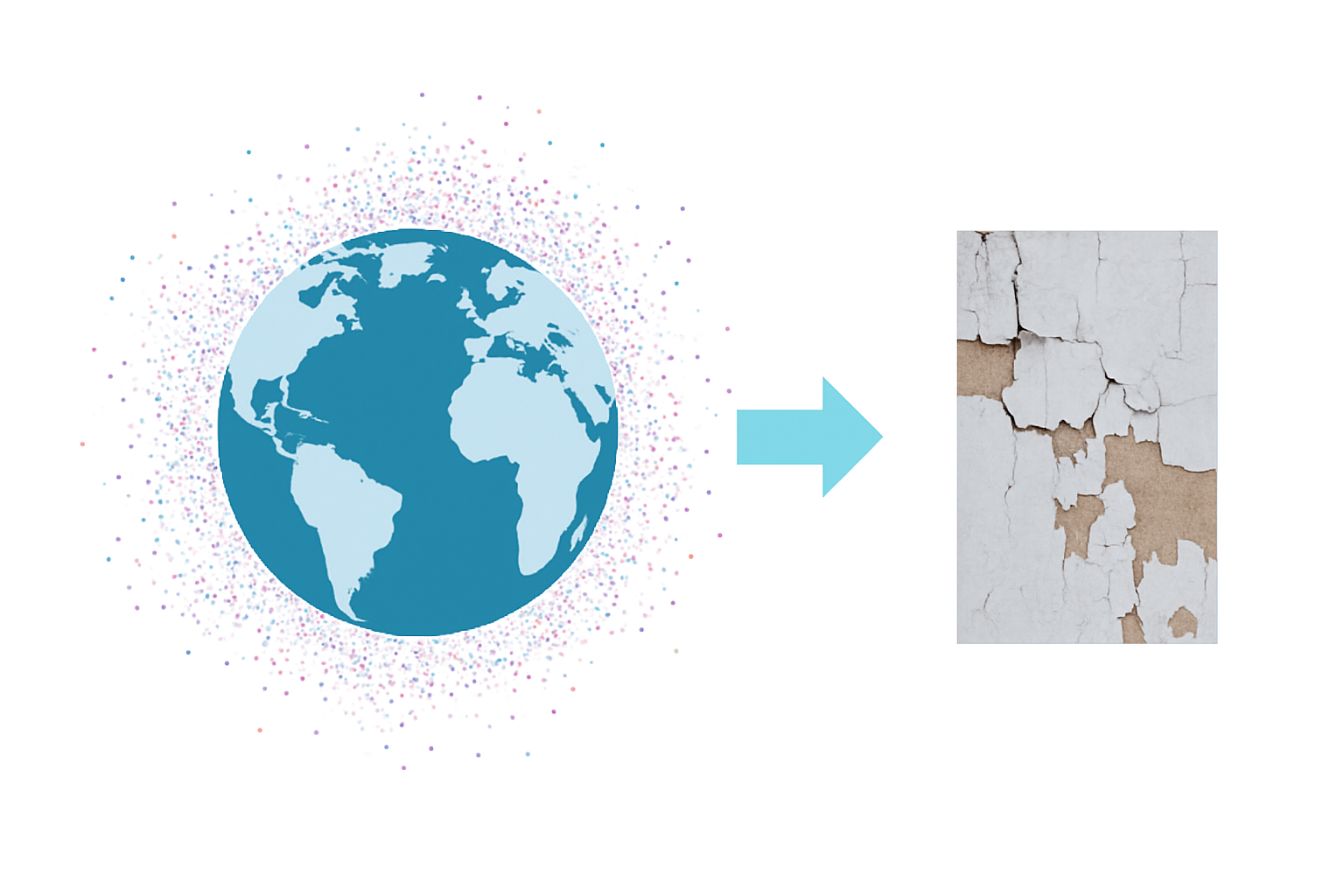
Weathering and abrasion of cured paint films due to exposure to sunlight, rain and physical friction cause the paint to flake off and become pulverized. This is the main generator of secondary microplastics. Key examples include: Architectural Coatings (buildings), Road Marking Paints, and Marine Coatings (ships, offshore platforms, buoys). |
| Maintenance / Removal | High-pressure washing, scraping and sand-blasting of old paint (especially on ships and industrial structures) directly release large quantities of paint microplastics into the environment, particularly into the marine environment. |
| Improper Disposal | Rinsing brushes and rollers by professionals and consumers in sinks or drains allows residual or uncured paint particles to bypass wastewater treatment (or be transferred to land via biosolids), creating a direct pathway for the release of microplastics. |
2. Escala e Impacto Ambiental
Fuentes verificadas, incluidos artículos revisados por pares e informes gubernamentales, subrayan la gravedad y los riesgos únicos de los microplásticos de pintura:
- Contribución Masiva: Modelos y estudios recientes (por ejemplo, de Environmental Action) estiman que la pintura podría ser la fuente individual más grande de fuga de microplásticos primarios a los ambientes acuáticos, superando potencialmente el desgaste de neumáticos y los textiles.
- Punto Crítico Marino: Se documenta que los copos de pintura son una forma abundante de microplástico en el océano, a menudo encontrados como el segundo tipo más común después de las microfibras. Los recubrimientos antiincrustantes marinos son una fuente importante, con una pérdida estimada del 6−7% del recubrimiento directamente al mar durante la vida útil de una embarcación.
- Riesgo de Alta Toxicidad: Los microplásticos de pintura son especialmente peligrosos debido a sus aditivos químicos. Se sabe que lixivian metales pesados tóxicos (por ejemplo, cobre, plomo, cromo) y biocidas que se incorporaron intencionalmente con fines anticorrosión o antiincrustantes.
- Daño Ecológico: La ingestión de estos fragmentos de pintura tóxica se ha relacionado con efectos adversos en la vida marina, incluido el estrés oxidativo, la inflamación y el daño potencial a largo plazo a medida que los elementos tóxicos se liberan en los organismos.
-
Scale of the problem
1,857 kilotuns of polymer microplastics anually.
-
Source of Risk
Degradation of architectural and industrial finishes.
-
Toxicity
Chemically active particles with toxic additives harm eccostems
3. Mitigation Interventions and Policies
Global efforts are accelerating to address the problem at different points in the paint life cycle:
| Mitigation Strategy | Action / Innovation |
|---|---|
| Upstream Innovation | Ecological Design & Longevity: Paint manufacturers are investing in R&D to create more durable paints, reducing the frequency of repainting and therefore abrasion. Efforts are also being made to explore non-polymeric or biodegradable alternatives for certain paint ingredients. |
| User/Application Control | Residue Capture Systems: The use of specialized equipment for vacuum collection during sanding or sandblasting (especially on large structures and ships) is a proven method to prevent the release of particles. |
| Point-of-Use Solutions | Brush Cleaning Systems: New commercial products, such as closed brush-cleaning systems (e.g., Lavabrush), capture paint residue in a container, preventing microplastics and pigments from entering the sewer system through sink rinsing. |
| Environmental Protection | Green Infrastructure: Rain gardens and similar landscaped sites installed near major roads and buildings have shown high success rates (up to 91%) in filtering microplastic particles from stormwater runoff before they reach river systems. |
| Regulatory Action | EU REACH Restriction (2023): The EU ban on intentionally added “synthetic polymer microparticles” targets primary microplastics. Although solid paint matrices currently receive a derogation (exemption) from the ban, the European Commission is expected to specifically consider restrictions for paints and their microplastic contributions under the revised Ecodesign for Sustainable Products Regulation (ESPR), starting in 2025. |
| Global Policy | UN Global Plastics Treaty: Negotiations for a legally binding global instrument to end plastic pollution include explicit mention of microplastics. Evidence on paint is being used to advocate for measures that require industries such as coatings to account for the impact of their products and implement circularity practices. |
Comparison: Microplastics in Oil-Based Paints vs. Bio-Based Insulating Coatings
The comparison between Traditional Oil-Based Paints/Coatings (Synthetic Polymers) and Biological-Based Insulating Coatings focuses on two key environmental advantages of the latter: the Persistence of Microplastics and the Toxicity of the Base Material.
| Characteristic | Oil-Based Paints/Coatings (Synthetic Polymers) | Bio-Based Insulating Coatings |
|---|---|---|
| Origin of Microplastics (MP) | Petrochemical polymers (e.g., alkyds, acrylics, epoxies, polyurethanes). | Bio-based polymers derived from renewable biomass (e.g., starch, cellulose, algae/alginate, plant oils, PLA). |
| Persistence of MPs in the Environment | High Persistence. Traditional microplastics are made to last for hundreds of years. They are largely inaccessible to biological degradation by microorganisms, resulting in widespread accumulation in soil and water. |
Low Persistence (Potential). These coatings are designed with polymers that are often biodegradable (or at least bio-based), meaning they have the potential to break down into benign compounds (e.g., CO₂, water, biomass) in a relatively short timeframe, especially under industrial composting conditions. |
| Particle Release Mechanism | High Release Risk at all life-cycle stages: wear and degradation, maintenance (sanding/scraping), and improper disposal (sink rinsing). | Similar Release Mechanisms. Particles are still released during wear, maintenance, and disposal. However, the released particles are theoretically biological microplastics (BMPs), which are less persistent. |
| Additives and Toxicity | High Toxicity Risk. Plastic particles themselves are often chemically inert, but they leach highly toxic additives (heavy metals such as copper/lead, biocides, anti-fouling agents) into the environment, representing a major ecological and human health hazard. | Lower Toxicity Risk (Potential). If additives are still required, the shift to bio-based polymers often aligns with the use of gentler, non-toxic, or naturally derived fillers and agents (e.g., recycled cellulose, perlite, or specific bio-based foams). The polymer base is generally more benign. |
| Insulating Agent | Not a core component. When insulation is needed, it is typically a separate material (e.g., foam board, fiberglass). | Inherent/Integrated Component. The “insulating agent” is a key characteristic, often achieved by including materials such as alginate (from algae) or non-petrochemical foams/fillers directly within the coating matrix, contributing to improved thermal performance and an overall lower environmental footprint throughout the product’s life cycle. |
Conclusion on Microplastic Reduction
The main advantage of bio-based insulating coatings is the shift from a persistent pollutant to a potentially degradable material.
● Oil-Based Paint MP: The problem is the quantity (large source) and the quality (high toxicity/persistence).
● Biological-Based Insulating Coating MP: These coatings still produce particles with wear, but it is hypothesized that the long-term environmental risk is significantly much lower because the polymer is designed to undergo faster biodegradation.
Research continues, and standardized testing is crucial to verify the true biodegradability at the end of the life cycle of these innovative coatings.